Generative AI, Unlocked: A Self-Service Approach for Citizen Data Scientists
Generative AI is rewriting the rules of digital productivity, from code generation and dashboard building to instant draft memos. Yet its full potential is realized only when domain experts can shape and share those outputs inside a secure, governed, and collaborative platform.
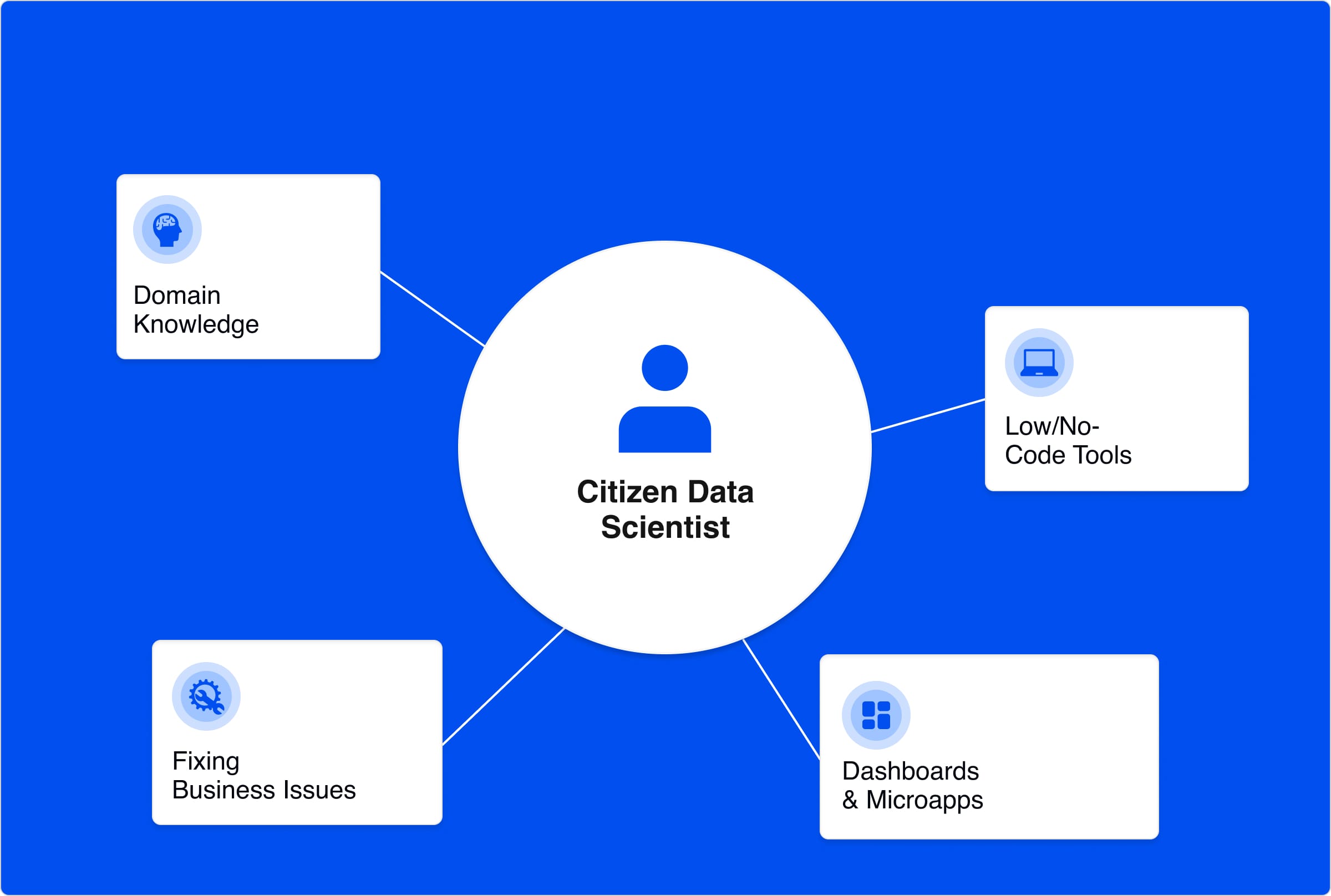
The rise of citizen data scientists, i.e., business users who combine domain knowledge with growing technical skills, is transforming how organizations innovate. According to Gartner, non-IT professionals are already responsible for most low-code development. When equipped with the right platform, they can lead a shift toward more agile, data-driven decisions.

Table of Contents
Why Citizen Data Scientists Matter More Than Ever
Generative AI empowers users, but it also raises the stakes for proper governance and reuse. Here’s what leading researchers and analysts are saying:
- $4.4 Trillion Opportunity: McKinsey estimates GenAI could create up to $4.4 trillion in annual value – but only if embedded in day-to-day work (McKinsey).
- Human Oversight is Crucial: As AI automates technical tasks, human judgment, curiosity, and context are the new differentiators (HBR).
- New Talent Models: Forbes reports domain experts are stepping into analytics roles, reshaping the AI workforce (Forbes).
The Hidden AI Adoption Barrier: Disconnected Tools and "Shadow Generative AI"
Without a shared workspace, citizen-led analytics often live in Excel files, Jupyter notebooks, or unauthorized GenAI or external SaaS tools. This leads to:
- Duplication and wasted effort
- Lack of security and compliance
- Slow collaboration and time-to-impact
ThoughtWorks calls this “the 10% trap,” where most effort goes into workaround solutions rather than value creation (ThoughtWorks). Formal training, structured access, and reusable digital assets are what separate hobbyist AI from high-impact AI.
What a Unified Self-Service Platform Should Provide
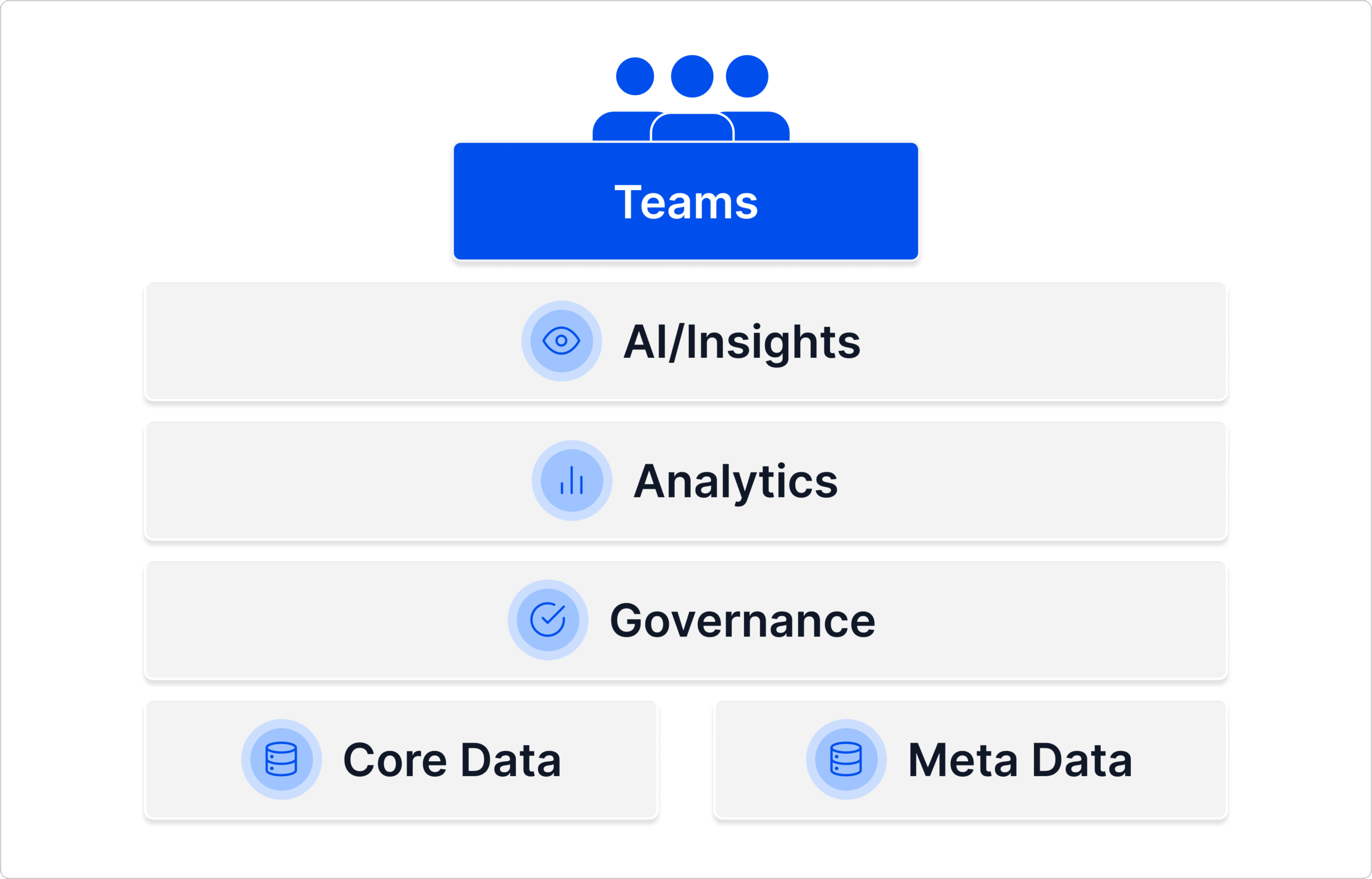
Unified Data Access
- Secure connectors to internal data sources like Databricks, SQL, SharePoint, Snowflake, and more.
- A single source of truth via federated datasets and authenticated pipelines
Built-in GenAI and Automation
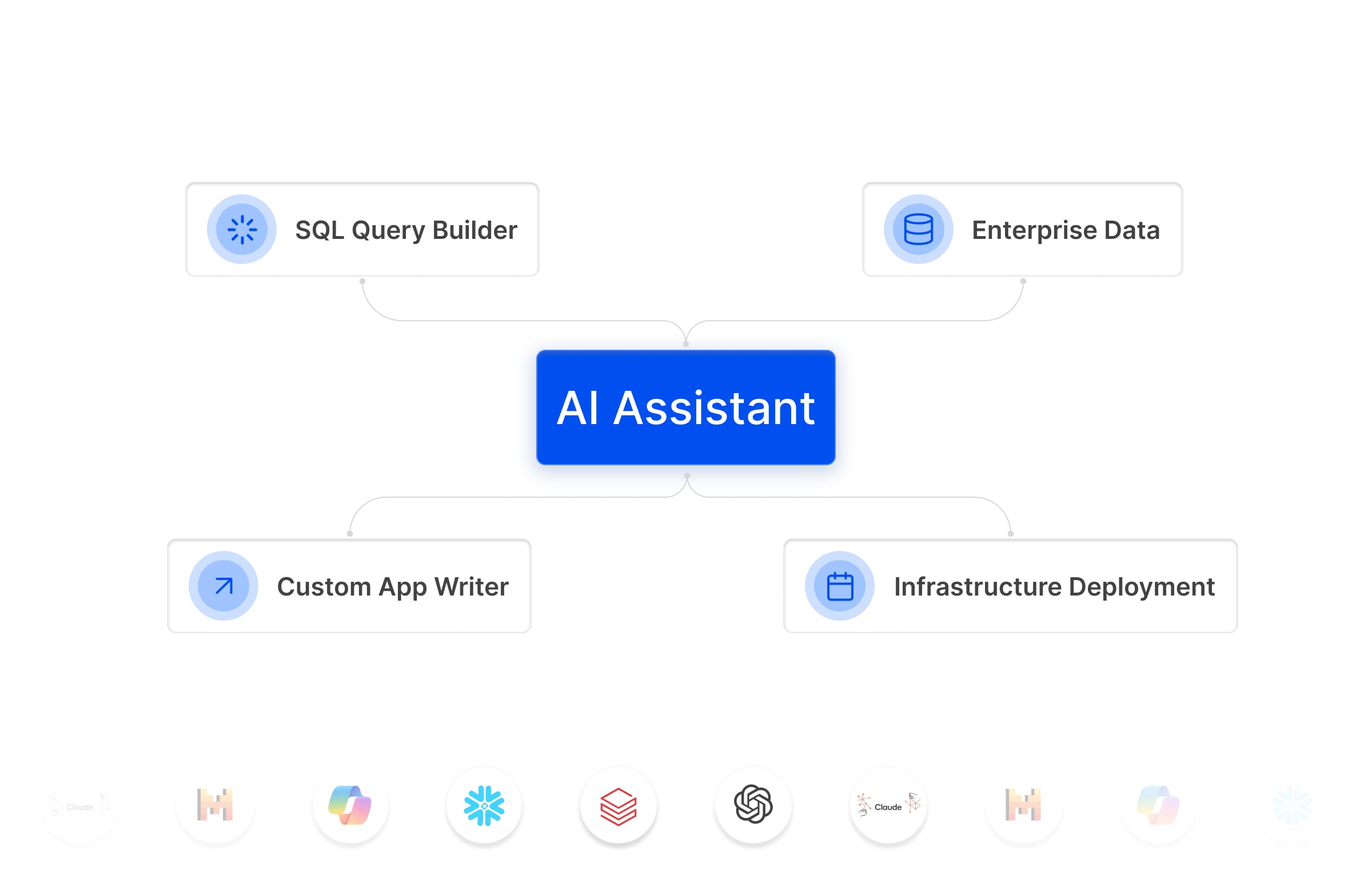
- Flexible and governed access to your pre-selected GenAI tooling to aid people co-create code, documentation, and even dashboards and apps.
- Retrieval-Augmented Generation (RAG) to surface insights from internal knowledge - without exposing data externally
Governance and Trust
- Role-based access and audit trails across prompts, models, and outputs
- Lineage tracking to understand where data, code, and AI outputs originate - a priority for CEOs per IBM’s latest study (IBM)
Reuse and Community
- FAIR (Findable, Accessible, Interoperable, Reusable) digital assets to accelerate reuse
- Peer learning spaces with forums, office hours, and FAQs to support continuous upskilling
Introducing the Adamatics Platform: The Collaborative Data Science Platform for the Enterprise
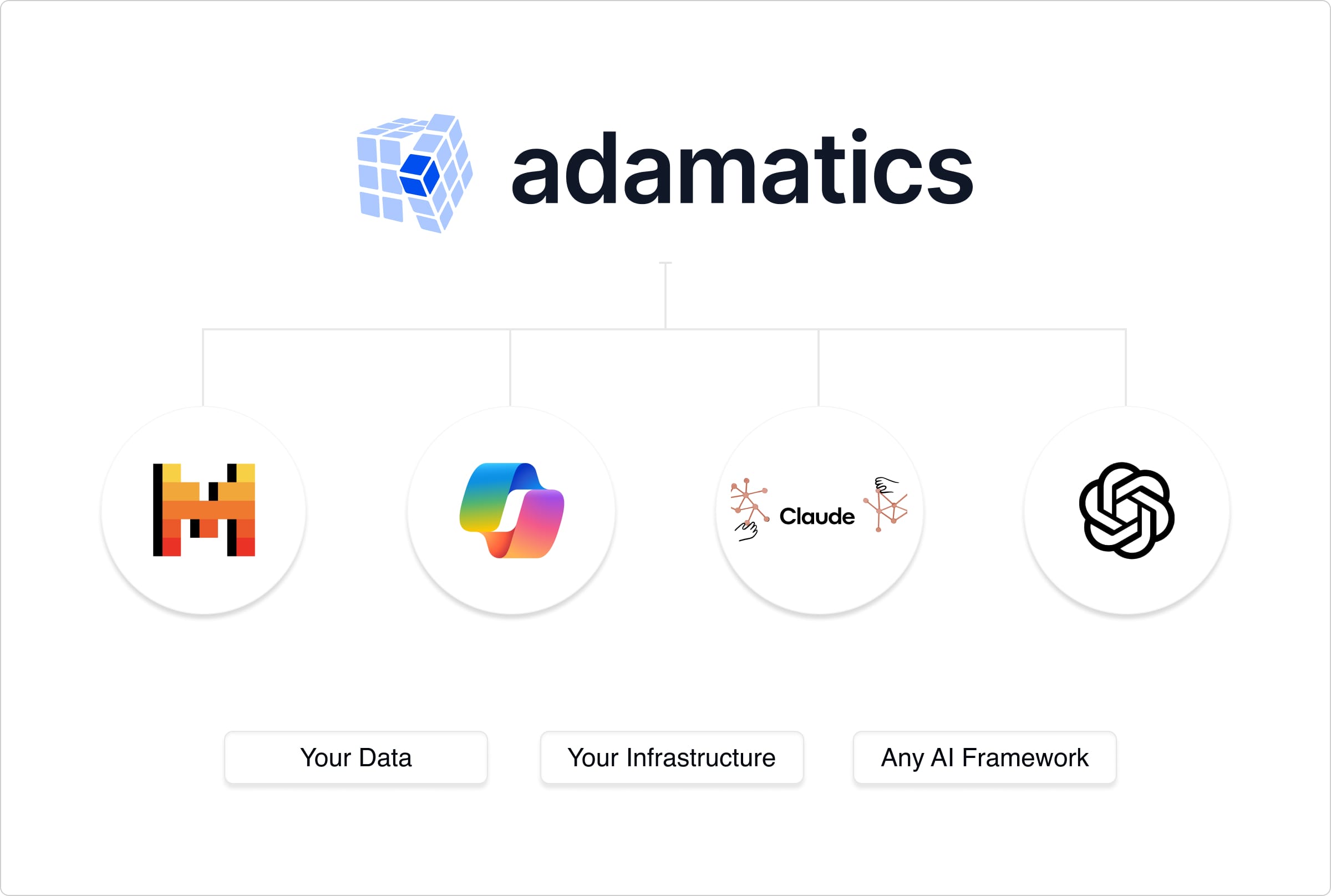
The self-service data science platform developed by Adamatics based on years of practical experience working with innovative customers like Novonesis and Novo Nordics, is built from the ground up to empower citizen data scientists, streamline governance, and accelerate AI innovation. Deployed securely in your infrastructure (or private cloud), it enables:
- Secure, SSO-Based Access – Every user enters through a controlled gateway, ensuring compliance and traceability.
- Integrated GenAI Tools – Built-in assistants, RAG templates, and low-code workflows tailored to your infrastructures.
- Gallery of Assets Based On FAIR data practices – Notebooks, dashboards, models, and apps shared as discoverable “cards” for reuse and learning.
- Containerized Workspaces – Jupyter, RStudio, MLFlow, and Docker environments that just work – no setup required.
- Usage Telemetry – Real-time adoption dashboards to track impact and identify support needs.
Organizations across pharma, biotech, finance and insurance already use the platform to connect siloed teams, standardize AI deployment, and empower over 1,000 citizen developers.
Executive Actions to Enable GenAI at Scale
- Nominate Citizen Champions Identify AI-positive power users across departments to pilot and socialize wins.
- Form a Cross-Functional Governance Council Bring together IT, risk, and business leaders to set light but clear guardrails.
- Balance Tech with Talent Accenture found firms investing equally in people and platforms gain 20% more productivity from AI (Accenture).
Final Word: From Possibility to Production
Generative AI opens the door – but citizen data scientists walk through it. The key is creating a governed, empowering environment where ideas flow and apps grow. The Adamatics platform helps mid-sized and large organizations move from isolated GenAI pilots to enterprise-wide innovation with secure reuse, collaboration, and speed built-in.
Book a demo to see how your subject matter experts can start delivering real business value with GenAI – securely, scalably, and together.
FAQ's
What is a Citizen Data Scientist in the context of generative AI?
A Citizen Data Scientist is a domain expert (for example in finance, operations or marketing) who uses analytics and generative AI tools to explore data, create insights and build simple solutions—without being a full-time data scientist or engineer. In a governed setup, they can safely apply GenAI to real business problems using the organisation’s own data.
Why is a self-service approach to generative AI important?
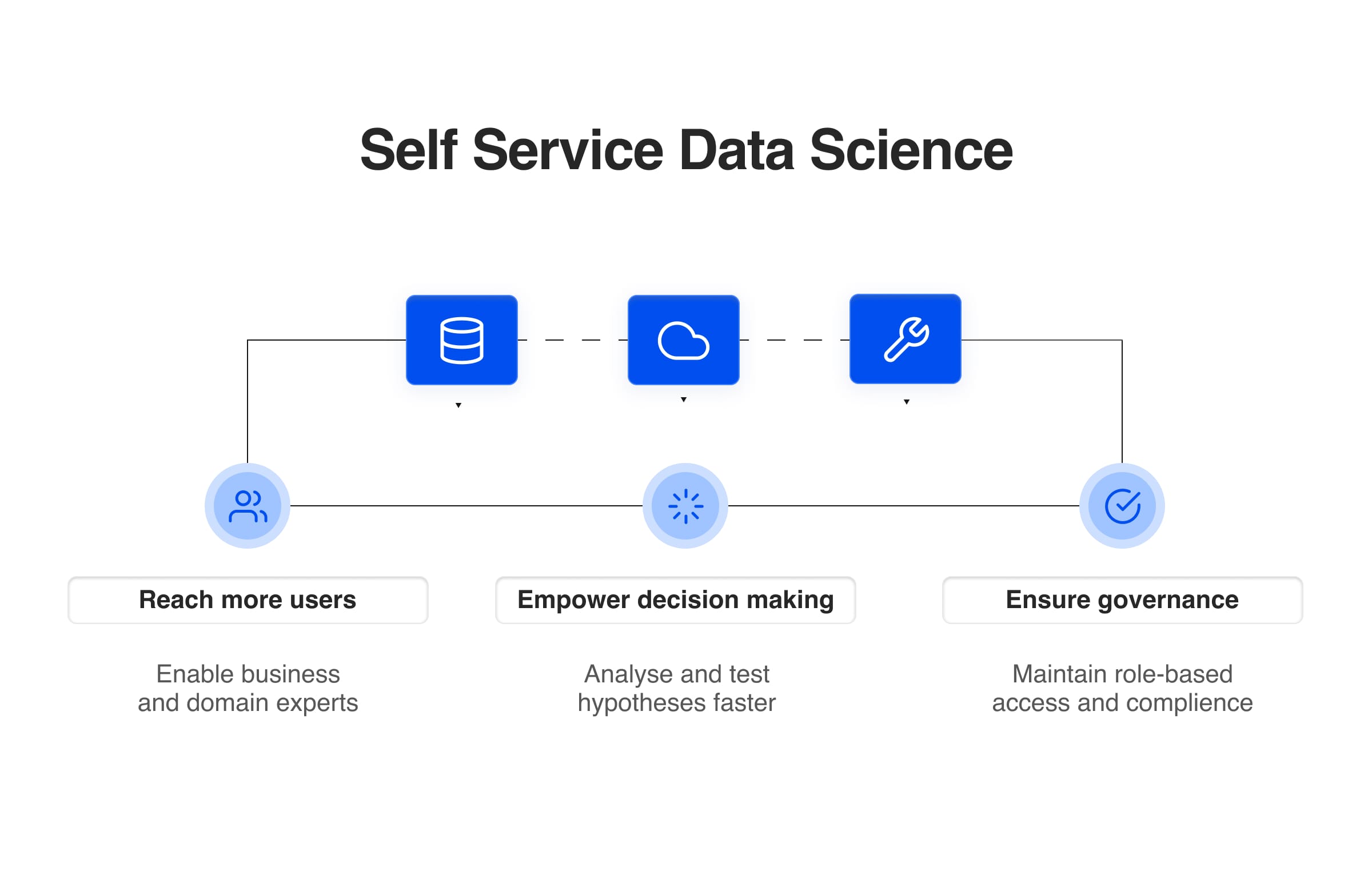
Self-service generative AI removes bottlenecks. Instead of waiting for IT or central data teams, Citizen Data Scientists can experiment, test ideas and prototype solutions themselves. With the right guardrails in place, this speeds up decision-making, drives innovation and helps the organisation get more value from its data and models.
How can enterprises safely enable Citizen Data Scientists to use GenAI?
Enterprises can enable Citizen Data Scientists safely by keeping GenAI inside their security perimeter, enforcing identity-based access control and grounding AI with governed internal data. That means using a secure integration layer for data access, role-based permissions, logging of activity and pre-built templates so users work within clear guardrails.
What role do governance and identity play in self-service GenAI?
Governance and identity define who can do what with which data. By using identity pass-through from systems like Azure AD, Okta or Entra, and combining it with clear policies, organisations can let Citizen Data Scientists explore and build with GenAI while still protecting sensitive data and meeting compliance requirements.
What are the business benefits of self-service generative AI?
Self-service GenAI allows teams to answer questions faster, automate repetitive work and prototype new analytics or decision-support tools. This reduces pressure on central data teams, shortens insight cycles and helps build a more innovative, data-driven culture across the organisation.
How does the Adamatics platform support Citizen Data Scientists using GenAI?
The Adamatics platform provides a secure, governed workspace and an Integration Layer that connects to enterprise data sources inside your firewall. It supports identity pass-through, LLM-agnostic experimentation and reusable templates, so Citizen Data Scientists can build and run GenAI use cases on internal data while IT and data teams maintain full control over access, governance and compliance.