Democratizing data and analytics: close four gaps, unlock ROI
You have hired smart people and invested in digitalization. Democratizing data and analytics is the fastest path to unlocking value in modern organizations, but most companies still struggle with silos, limited access, and disconnected tools.
Most organizations do not lack ideas; they lack a fast, governed way to turn them into analytics people actually use.
The fix is practical: close four organizational gaps and put everyone on a shared platform where work is Findable, Accessible, Interoperable, and Reusable (FAIR) from day one. That is how teams move from slides to shipped apps, and why leaders adopt a shared collaborative platform for data and analytics.
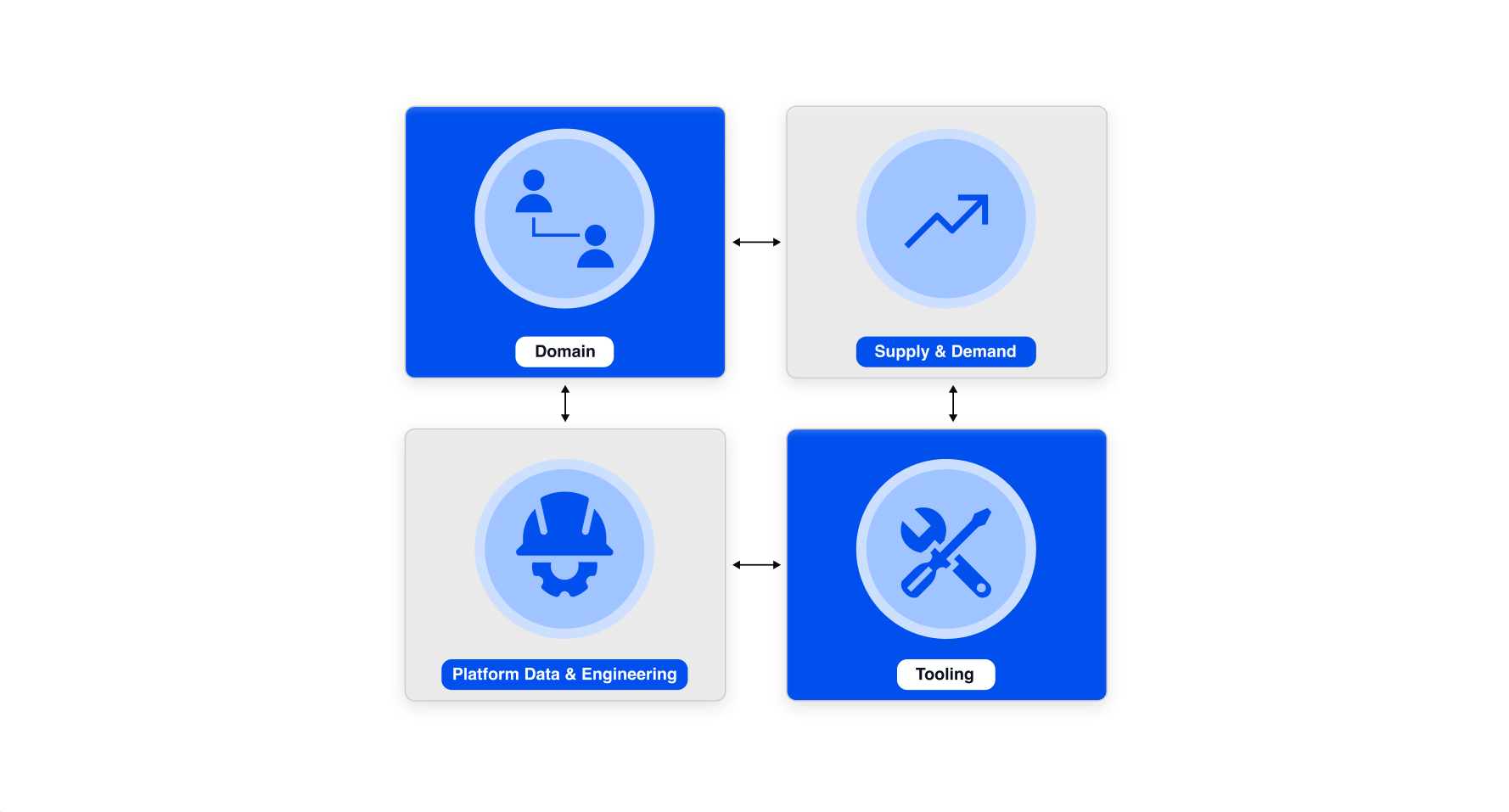
Table of Contents
The four gaps you must close when Democratizing data
Across enterprises, we see the same four bottlenecks:
The Domain Gap: Subject matter experts (SMEs), analytics practitioners, and analytics consumers work in silos with different language, incentives, and tools. Knowledge gets lost, collaboration suffers, and delivery stalls.
The Supply-Demand Gap: Demand for analytics exceeds the number of people able to create it. High entry barriers keep potential creators on the sidelines, so data potential stays unused.
The Platform & Data Engineering Gap: Teams overbuild generic infrastructure and underinvest in integrations that connect data and apps. Time-to-value stretches, maintenance grows, and business confidence drops.
The Tooling Gap: There are too few options between Excel and fully custom apps. Ideas either stay simplistic or die in the jump to heavyweight builds, so the road from idea to ROI is too long.
Close those four gaps by running on a platform that unifies people, data, and tools, and time-to-value collapses.
How to close them, and the business benefit
1) Close the Domain Gap
Do this: Stand up coordinated training and shared ways of working, give everyone access to the same core tools, and create communities of practice with named bridge builders who span business and analytics. Mix SMEs and analytics professionals on delivery teams and let them interact and share knowledge.
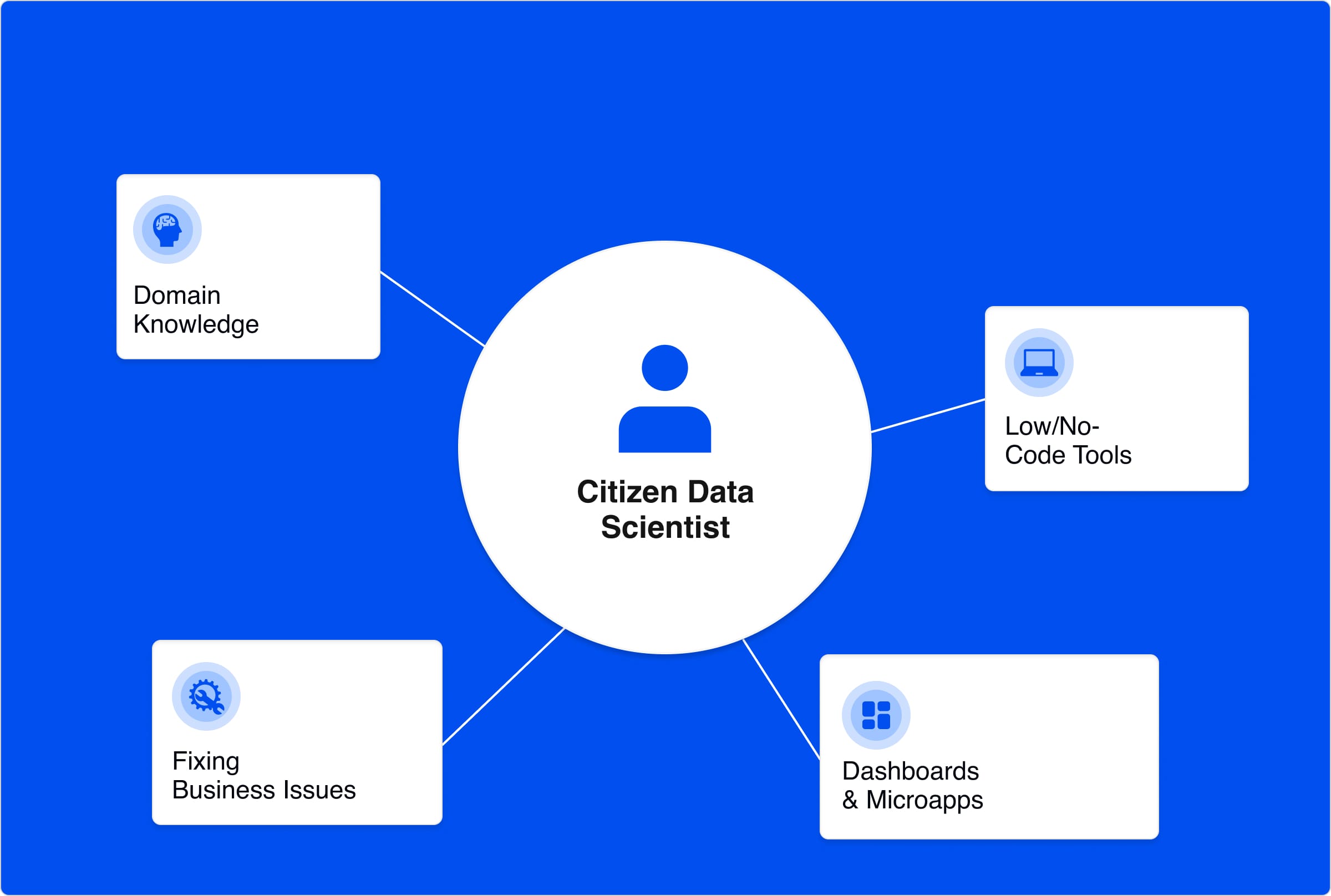
Benefit: SME knowledge lands directly in products, iteration shrinks, fit improves, and adoption rises. Over time, you grow a bench of citizen data scientists.
2) Close the Supply-Demand Gap.
Do this: Lower the barrier to create. Provide a one-stop platform for learning, examples, and tool access. Encourage community support and reuse so more people can build responsibly. Ensure that the “hard things” related to IT know-how are made available as an easy-to-use service for citizen developers. Make the right way to do IT the easy way.
Benefit: More relevant solutions are built closer to the problem, analytics becomes more decentralized and agile, and ROI accelerates.
3) Close the Platform & Data Engineering Gap
Do this: Buy before you build, start from use cases, and invest in an enterprise API layer that acts like a switchboard across systems. Make components reusable, documented, and tested with a FAIR service catalog and usage examples.
Benefit: Engineering focuses on high-value integrations, value appears immediately, and “what if” questions get answered quickly. Confidence increases because delivery is visible and useful. The engineering effort empowers SMEs and citizen developers to help close the Supply-Demand Gap by enabling self-service.
4) Close the Tooling Gap
Do this: Offer a progression from idea to lightweight widgets, notebooks, and small web apps on a common platform. Encourage sharing, cross-learning, and agile practices. Make some opinionated choices so users share development practices that support collaboration, component reuse, and learning from peers.
Benefit: Ideas move cleanly from concept to PoC to production. Components get reused, so you scale impact without scaling headcount linearly. Collaboration increases, and an internal technical user community will evolve.
The foundation that makes this stick
- Support learning and experimentation across roles.
- Empower SMEs to co-create with equal access to core tools.
- Create a shared enterprise API so data and apps connect cleanly.
- Back a FAIR analytics community so assets are easy to find, use together, and reuse.
FAIR, briefly: Findable, Accessible, Interoperable, Reusable – applied to data, code, models, dashboards, and APIs. In practice, that means cataloged and discoverable assets, safe self-service access, open formats and shared contracts, plus documentation and versioning so teams can reuse with confidence.
How to tell that it is working
- Time from idea to first PoC, then PoC to first business use.
- % of use cases delivered by mixed SME-analytics teams.
- % of new solutions that reuse enterprise API components.
- Monthly active creators on the shared platform increases.
- Higher numbers of shared analytics products that are actually used, not just published.
Bottom line: democratization is not a slogan, it is an operating model. Lower the barrier to create, align on shared tools and APIs, and blend SME expertise with analytics craft. Do that, and you shorten decision cycles, raise adoption, and compound ROI across every new use case.
Unlock ROI with Adamatics by Democratizing Data
Ready to close the gaps with a platform built for FAIR, governed collaboration? Book a discovery call with Adamatics today to see how our platform and expertise in operationalizing FAIR can empower your teams to turn ideas into impact.
FAQ's
What does it mean to democratize data and analytics?
Democratizing data and analytics means giving more people across the organisation safe, governed access to insights, tools and workflows—not just central data teams. It focuses on empowering employees to explore data, use analytics responsibly and contribute to decision-making without relying on long IT or analytics queues.
Why do organisations struggle to democratize analytics?
Organisations struggle because four gaps often stand in the way: the domain gap, the supply-demand gap, the platform and data engineering gap, and the tooling gap. Together, these gaps create friction, bottlenecks and inconsistent results, preventing teams from scaling analytics impact across the business.
What is the domain gap?
The domain gap occurs when analytics teams lack the business context needed to interpret data accurately, while domain experts lack the tools or access to explore insights themselves. Democratization closes this gap by enabling domain experts to participate directly in analysis using governed, self-service tools.
What is the supply-demand gap in analytics?
The supply-demand gap appears when requests for analytics far exceed the capacity of central data teams. This leads to backlogs, delays and missed opportunities. By enabling more people to self-serve safely, organisations reduce pressure on specialists and increase the speed of insight generation.
What is the platform & data engineering gap?
This gap arises when infrastructure, data access and engineering tasks are too complex or slow to support everyday analytics work. Democratization requires a consistent platform with governed data access, identity pass-through, standardized environments and reusable components so teams can build reliably at scale.
What is the tooling gap?
The tooling gap appears when different teams use inconsistent tools, environments or processes, creating confusion and incompatible outputs. Closing this gap means providing unified, reusable tools and templates so teams can collaborate effectively and avoid duplicated or conflicting work.
How does closing these four gaps improve ROI?
When the four gaps are closed, more people can contribute to analytics work safely, insights flow faster and teams spend less time waiting or redoing work. This leads to higher productivity, better decision-making, more reliable models and analytics solutions—and ultimately, stronger business outcomes.
How does the Adamatics platform help democratize data and analytics?
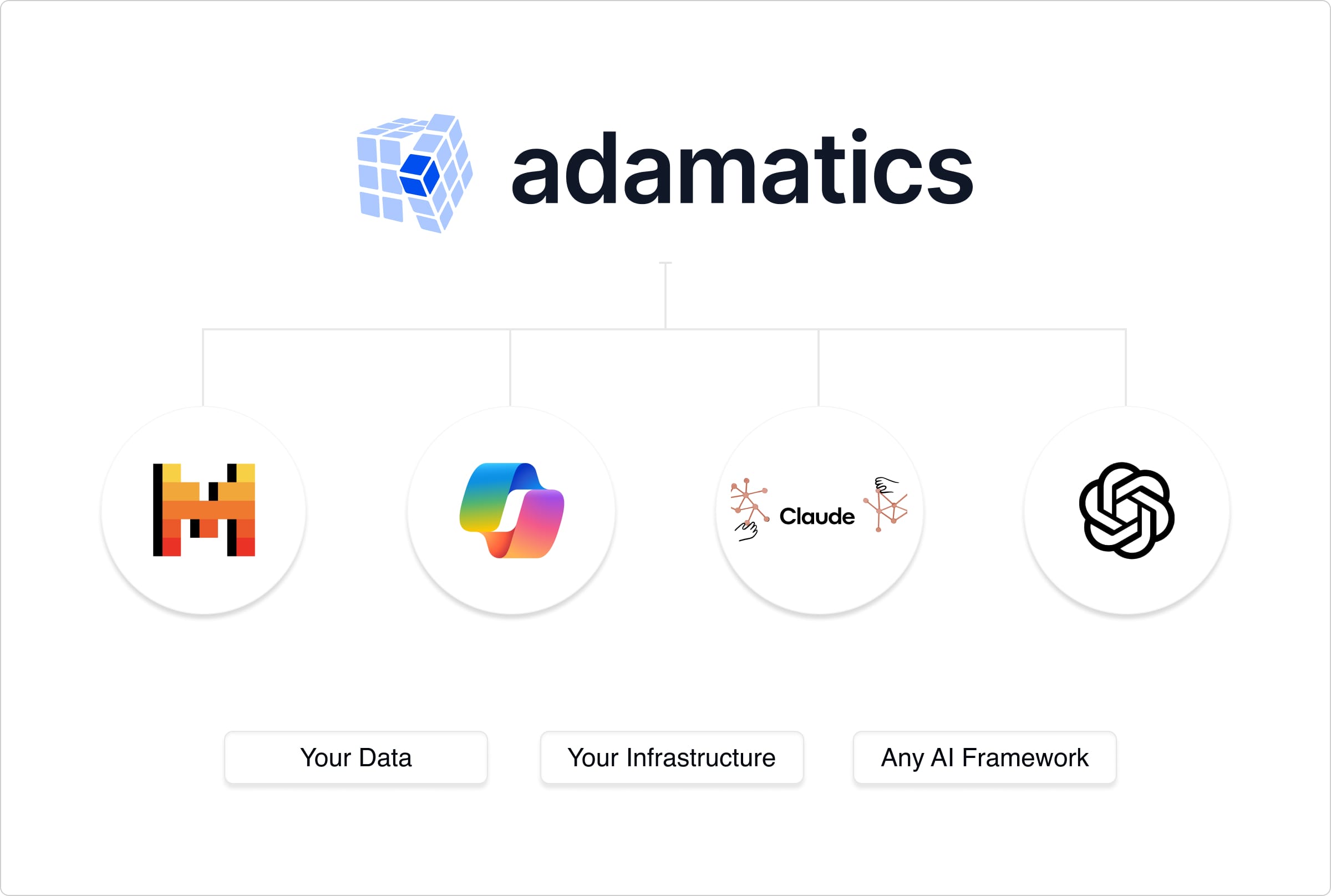
Adamatics provides a governed workspace, standardized environments, a reusable Integration Layer and templates that support safe self-service analytics. It closes the four gaps by helping domain experts explore data, giving developers consistent building blocks and supporting IT governance—turning analytics from isolated efforts into repeatable, organization-wide value.