Digital Autonomy through Containerization
Self-Service Containerization, along with other self-service capabilities, offers a paradigm shift in empowering individuals to deliver digital artefacts autonomously.
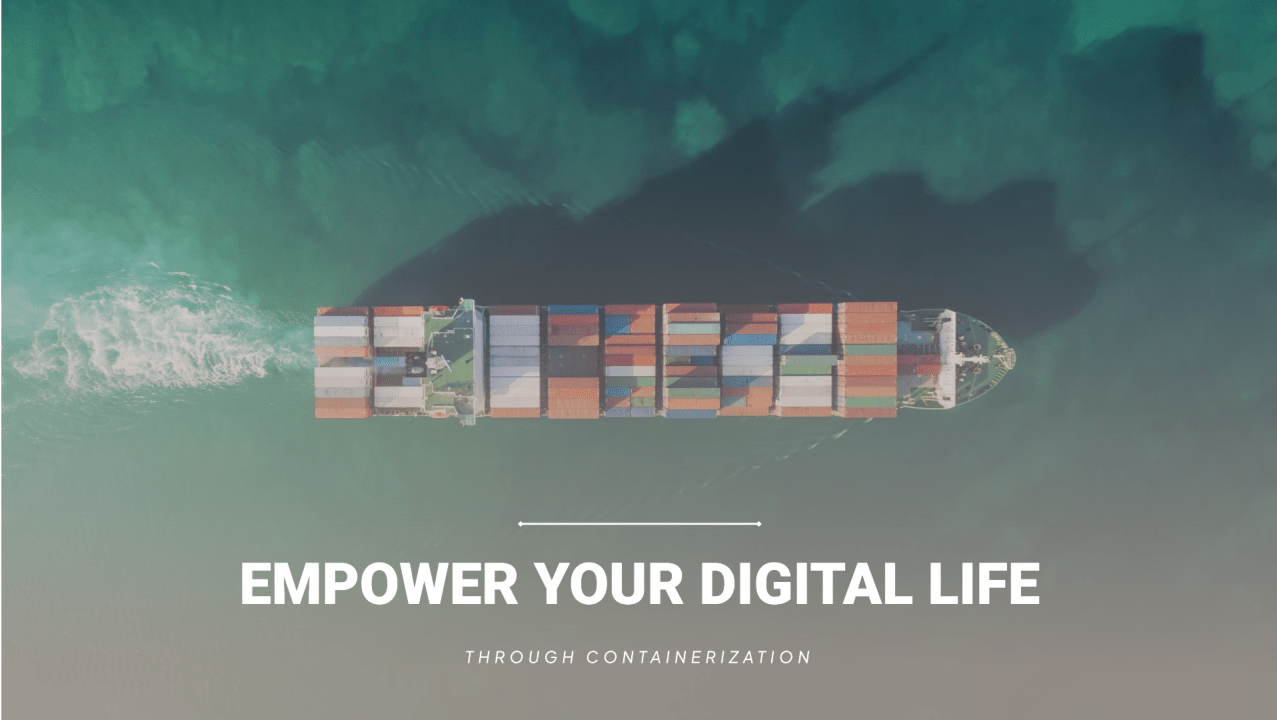
A key to creating Successful Digital Initiatives
Self-Service Containerization, along with other self-service capabilities, offers a paradigm shift in empowering individuals to deliver digital artifacts autonomously. By putting in place a user-friendly container orchestration platform, organizations can provide an environment where users can build, deploy, and manage custom applications without extensive IT intervention. This approach supports a culture of innovation and collaboration, enabling users to explore, experiment, prototype quickly, and deliver digital assets at an accelerated pace.
Today, succeeding with business transformation means succeeding with digital transformation. Finding constructive and profitable ways to accelerate digital transformation efforts is difficult, because digital solutions heavily rely on IT projects, allocations, and complex prioritization, hindering the transition from business units to shared resources. A key to creating successful digital initiatives in organizations lies in embracing self-service and autonomy through containerization to break down these barriers.
Using containers and containerization technologies is a key technology enabler that can unlock the knowledge about how to digitize business processes. A Harvard Business Review article in 2022 lists self-service systems as a way to bring data products into play, and as early as 2017 McKinsey identified self-service digital enablers as one of five key capabilities for the next generation operation models.
Benefits of Self-Service and Autonomy:
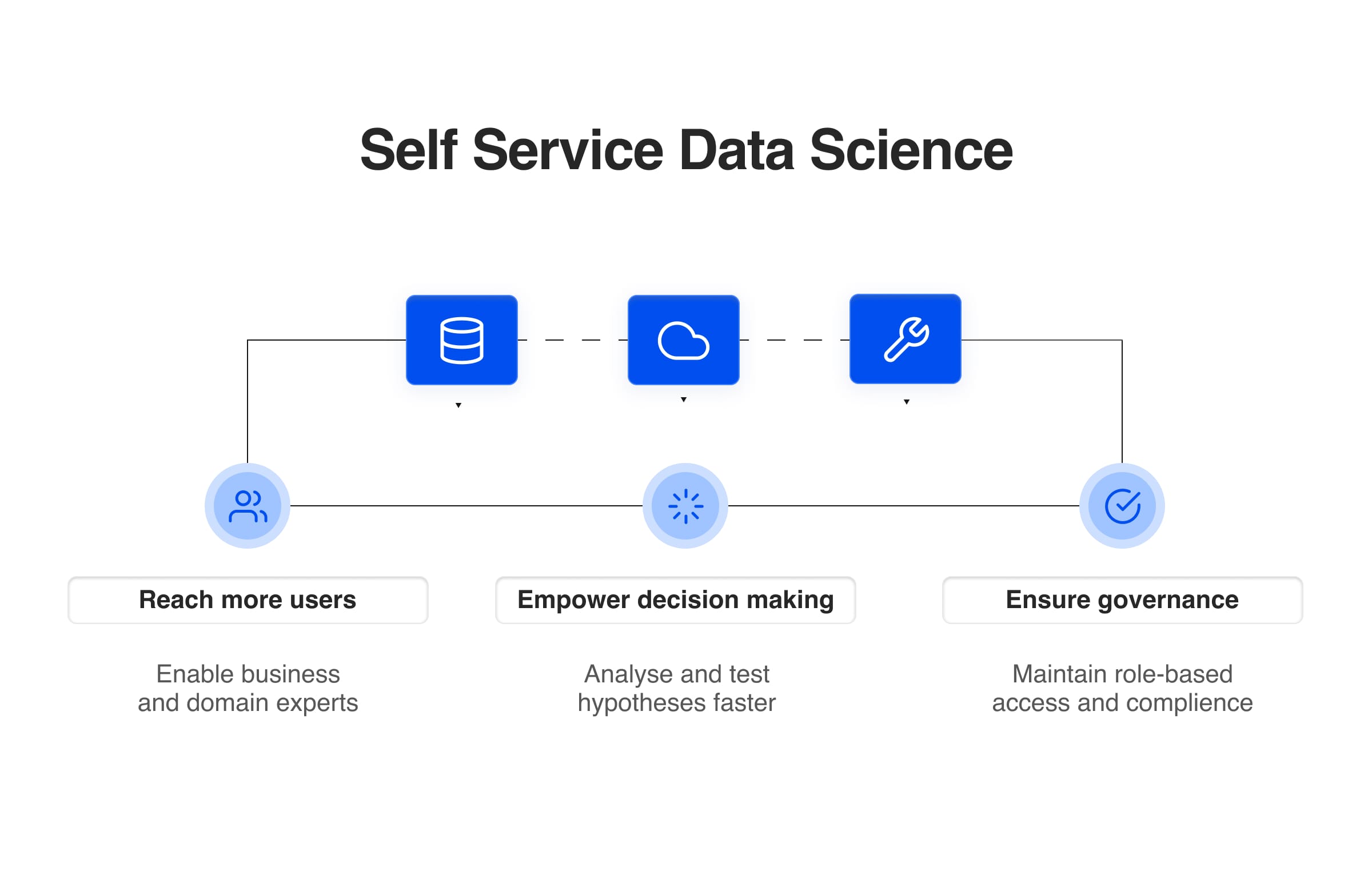
Accelerated Innovation: Empowering business users with self-service capabilities reduces their dependence on IT resources and infrastructure knowledge. This autonomy allows for faster testing of hypotheses, enabling rapid innovation and quicker response to changing market demands.
Streamlined Resource Allocation: By embracing self-service and containerization, organizations can reduce the burden on scarce IT resources, eliminating the need for extensive project allocations and complex prioritization. Business units can independently manage their applications, freeing up IT teams to focus on critical tasks and other strategic initiatives.
Enhanced Agility and Flexibility: Delivery through a self-service platform and by containerizing deliveries allows business users to iterate, prototype, and deploy digital solutions at their own pace. This flexibility fosters a culture of experimentation and empowers teams to explore new ideas without being hindered by resource constraints or lengthy approval processes.
Getting Started with Self-Service and Containerization:
To get started on this journey, these are the most important steps.
Define an Implementation Strategy: Identify the areas where self-service capabilities can have the most significant impact. Start by implementing containerization for smaller, less complex projects, gradually expanding to larger initiatives as confidence and expertise grow.
Move the Heavy, Generic Work to the Platform: Lifting the burden of authentication, network setup, certificates, resource allocation, scaleup and infrastructure orchestration from the developers of digital solutions. Let users focus on where the business differentiates.
Select the Right Container Orchestration Platform: Choose a reliable and scalable container orchestration platform, such as Kubernetes, that provides robust self-service features. Consider factors like ease of use, community support, and integrations with existing systems.
Establish Training and Support Mechanisms: Provide comprehensive training and ongoing support to business users to ensure they have the necessary skills to effectively leverage self-service and containerization. Encourage knowledge sharing and collaboration among teams to maximize the benefits.
Foster a Culture of Autonomy and Collaboration: Encourage cross-functional collaboration between business units and IT teams, breaking down silos and promoting a DevOps mindset. Emphasize the importance of autonomy and self-service, empowering individuals to take ownership of their digital initiatives.
Learn More
Reach out to us to learn more about Digital Autonomy through Containerization
FAQ's
What is self-service containerization in a digital context?
Self-service containerization is an approach where business and technical users can build, deploy and manage container-based applications themselves on a governed platform, without needing constant IT intervention. It combines container technology with a user-friendly orchestration layer so individuals and teams can deliver digital solutions autonomously.
Why is self-service containerization a key to successful digital initiatives?
Self-service containerization removes bottlenecks created by traditional IT project gates, allocations and prioritisation. By giving business units controlled autonomy, organisations can move from ideas to running digital solutions much faster, which is essential for succeeding with both business and digital transformation.
What are the main benefits of self-service and autonomy for organisations?
The main benefits include accelerated innovation, more efficient use of scarce IT resources and greater agility. Business users can test hypotheses quickly, iterate on prototypes and deploy solutions at their own pace, while IT teams focus on core infrastructure, governance and strategic work instead of manual hand-holding.
How does self-service containerization change the role of IT?
With self-service containerization, IT shifts from building every solution to providing a secure, reliable platform. Heavy, generic tasks such as authentication, networking, certificates, resource allocation and scaling are handled by the platform, so IT can define guardrails and standards while business users focus on the logic that differentiates the organisation.
How can organisations get started with self-service and containerization?
Organisations should start by defining an implementation strategy, identifying where self-service can create quick wins. It’s often best to begin with smaller, less complex projects, then expand as confidence grows. In parallel, they should move common infrastructure work into the platform and introduce training, documentation and support.
Why is choosing the right container orchestration platform important?
The choice of container orchestration platform—such as Kubernetes—directly affects usability, scalability and integration with existing systems. A good platform provides robust self-service features, strong community support and a smooth developer experience, making it easier for teams to adopt containerization and keep it sustainable over time.
What cultural changes support self-service containerization?
To fully benefit, organisations need a culture that values autonomy, collaboration and shared responsibility. Encouraging cross-functional work between business units and IT, promoting a DevOps mindset and supporting knowledge sharing all help teams take ownership of digital initiatives while staying aligned with governance and best practices.